ETJava Beta | Java
 注册
登录
注册
登录
注册
登录
注册
登录
对Azure上的虚拟机资源,需要进行安全管理。只有指定的IP地址才能够通过RDP/SSH远程到虚拟机上, 有如下几点考虑:
1) 使用Azure Policy服务,扫描订阅中全部的网络安全组(NSG: Network Security Group) 资源
2) 判断入站规则,判断是否是3389, 22端口
3) 判断源地址是否是被允许的IP
4) 对不满足条件的 NSG规则进行审计。提示不合规( Non-compliant )
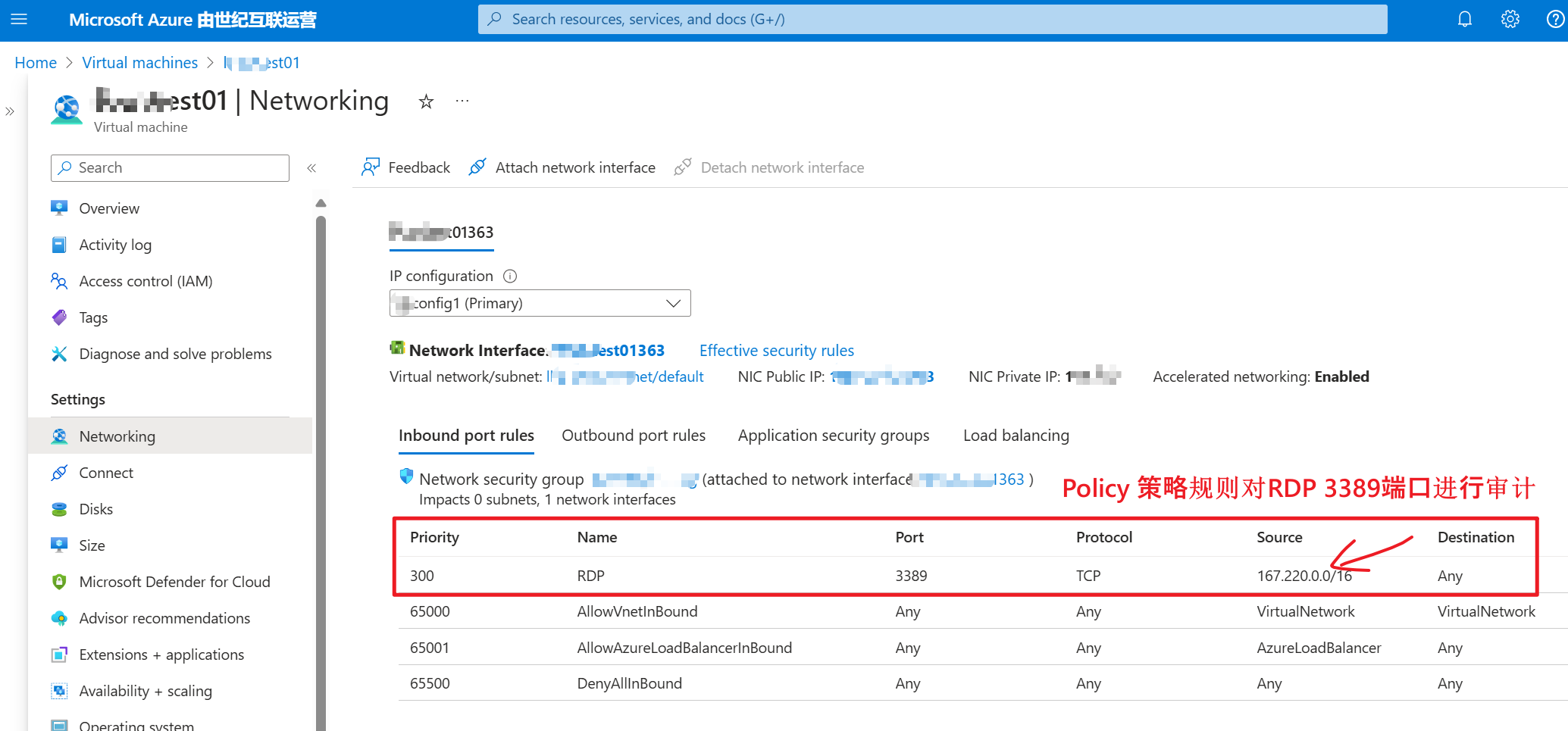
需要满足以上要求的规则,如何来编写呢?
使用Azure Policy可以完成对Azure资源的集中管制,以满足合规需求。为满足以上需求:
在NSG的Overview页面,点击右上角的“JSON View”链接,查看资源的JSON内容,其中securityRules的内容为:
{
    "name": "RDP",
    "id": "/subscriptions/x-x-x-x/resourceGroups/xxxx/providers/Microsoft.Network/networkSecurityGroups/xxxx-xxx/securityRules/RDP",
    "etag": "W/\"xxxxxxx\"",
    "type": "Microsoft.Network/networkSecurityGroups/securityRules",
    "properties": {
        "provisioningState": "Succeeded",
        "protocol": "TCP",
        "sourcePortRange": "*",
        "destinationPortRange": "3389",
        "sourceAddressPrefix": "167.220.0.0/16",
        "destinationAddressPrefix": "*",
        "access": "Allow",
        "priority": 300,
        "direction": "Inbound",
        "sourcePortRanges": [],
        "destinationPortRanges": [],
        "sourceAddressPrefixes": [],
        "destinationAddressPrefixes": []
    }
}
其中:
它们,就是组成Policy Rule的内容
Policy的总体框架是:
{
  "mode": "All",
  "policyRule": {
    "if": {
       // 需要进行审计的条件
       //1: 资源的类型是 Microsoft.Network/networkSecurityGroups/securityRules
       //2: 入站规则 Inbound
       //3: 端口是3389 或 22
       //4: 如果不在允许的IP地址列表里,则需要审计
    },
    "then": {
      "effect": "audit"
    }
  },
  "parameters": {
     //输入参数,本例中是允许的IP地址列表
  }
}
转换为Policy语句:
{
  "field": "type",
  "equals": "Microsoft.Network/networkSecurityGroups/securityRules"
}
"direction": "Inbound"
转换为Policy语句:
     {
            "field": "Microsoft.Network/networkSecurityGroups/securityRules/direction",
            "equals": "Inbound"
     }
"destinationPortRange": "3389" 或 "destinationPortRange": "22"
转换为Policy语句:
        {
          "anyOf": [
            {
              "field": "Microsoft.Network/networkSecurityGroups/securityRules/destinationPortRange",
              "equals": "22"
            },
            {
              "field": "Microsoft.Network/networkSecurityGroups/securityRules/destinationPortRange",
              "equals": "3389"
            }
          ]
        }
"sourceAddressPrefix": "167.220.0.0/16"
转换为Policy语句:
{
   "field": "Microsoft.Network/networkSecurityGroups/securityRules/sourceAddressPrefix",
    "notIn": "[parameters('allowedIPs')]"
 }
因为被允许的IP地址应该是多个,所以准备为一个Array对象, 参数名称为:allowedIPs。
结构如下:
    "parameters": {
      "allowedIPs": {
        "type": "Array",
        "metadata": {
          "displayName": "Allowed IPs",
          "description": "The list of allowed IPs for resources."
        },
        "defaultValue": [
          "192.168.1.1","x.x.x.x"
        ]
      }
    }
{
    "mode": "All",
    "policyRule": {
        "if": {
            "allOf": [
                {
                    "field": "type",
                    "equals": "Microsoft.Network/networkSecurityGroups/securityRules"
                },
                {
                    "field": "Microsoft.Network/networkSecurityGroups/securityRules/direction",
                    "equals": "Inbound"
                },
                {
                    "anyOf": [
                        {
                            "field": "Microsoft.Network/networkSecurityGroups/securityRules/destinationPortRange",
                            "equals": "22"
                        },
                        {
                            "field": "Microsoft.Network/networkSecurityGroups/securityRules/destinationPortRange",
                            "equals": "3389"
                        }
                    ]
                },
                {
                    "field": "Microsoft.Network/networkSecurityGroups/securityRules/sourceAddressPrefix",
                    "notIn": "[parameters('allowedIPs')]"
                }
            ]
        },
        "then": {
            "effect": "audit"
        }
    },
    "parameters": {
        "allowedIPs": {
            "type": "Array",
            "metadata": {
                "displayName": "Allowed IPs",
                "description": "The list of allowed IPs for resources."
            },
            "defaultValue": [
                "192.168.1.1","x.x.x.x"
            ]
        }
    }
}
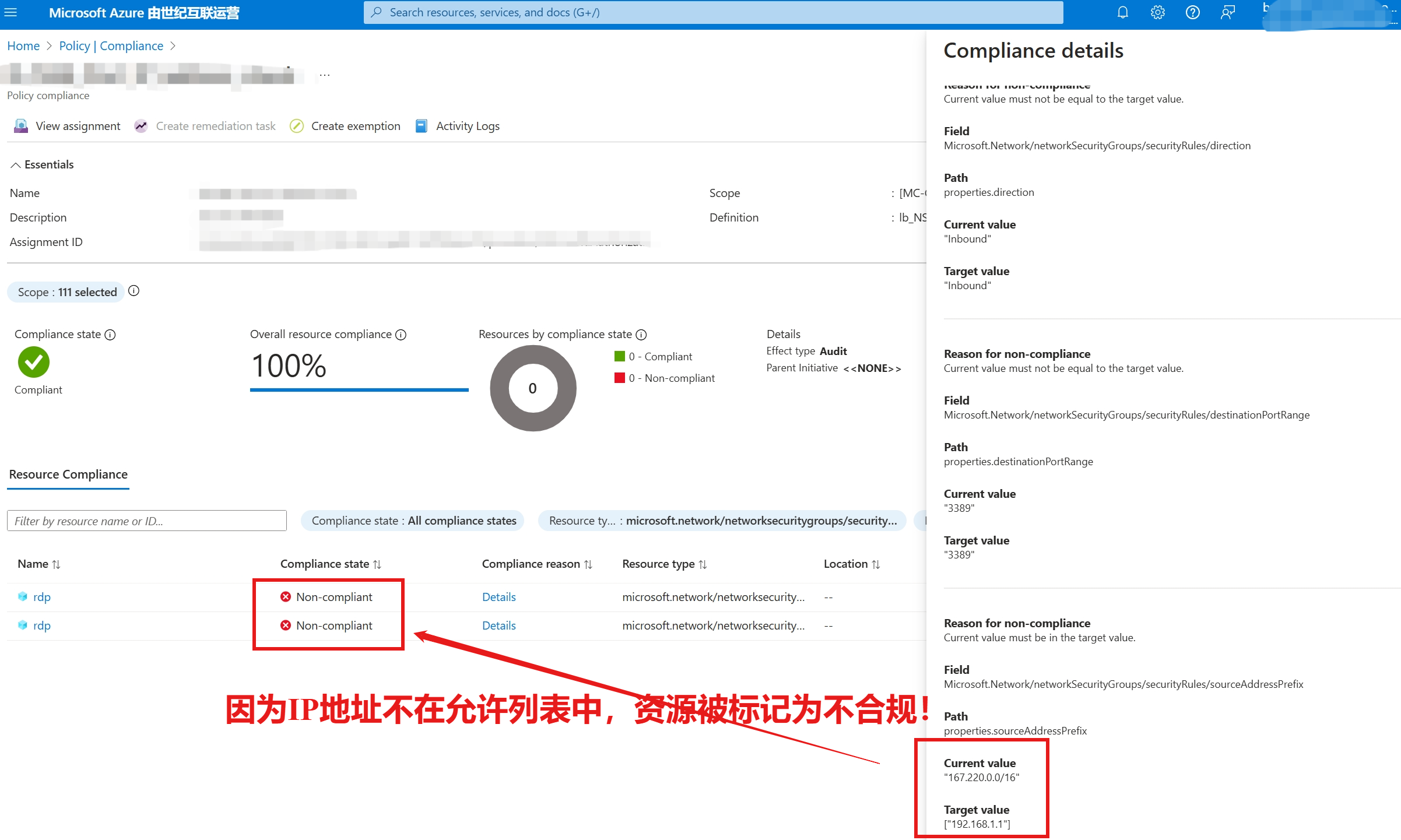
Using arrays in conditions: https://learn.microsoft.com/en-us/azure/governance/policy/how-to/author-policies-for-arrays#using-arrays-in-conditions
deny-nsg-inbound-allow-all: https://github.com/Azure/azure-policy/blob/master/samples/Network/deny-nsg-inbound-allow-all/azurepolicy.json
Azure Policy definitions audit effect: https://learn.microsoft.com/en-us/azure/governance/policy/concepts/effect-audit
 官方公众号
官方公众号